Friday, April 26, 2013

Microscopic Caffeine Fiends


Scientists tweaked the genes of a bacterium so that it requires caffeine to live and reproduce. Now, they can use this microbe to measure concentrations of caffeine in beverages such as soda, coffee and energy drinks. When the microbes are added to a water-weakened version of one of those drinks, the bacteria grow and the liquid turns cloudy — but only if the drink contained caffeine. In caffeine-free Coke (top left), no cloudiness appears. 
Credit: Barrick Lab/University of Texas at Austin

Giant Dry Ice Bubble Experiment


http://www.stevespanglerscience.com/experiment/dry-ice-crystal-ball-bubble

Einstein's Gravity Theory Passes Toughest Test Yet


Superdense neutron star, emitting beams of radio waves as a pulsar, center, is closely paired with a compact white-dwarf star. Together, the two provide physicists with an unprecedented natural, cosmic "laboratory" for studying the nature of gravity. The grid background illustrates the distortions of spacetime caused by the gravitational effect of the two objects. (Credit: Antoniadis, et al.)

Deadly New Flu


http://www.sciencenewsforkids.org/2013/04/new-kind-of-influenza-h7n9-that-started-in-birds-is-now-taking-a-toll-on-humans/

Infectious Animals


Jonathan Epstein studies how diseases are transferred between animals and people. This bat, Pteropus giganteus, commonly carries Nipah virus. The germ killed hundreds of people and more than one million farm animals. 
Credit: EcoHealth Alliance

Cool Jobs: The Science of Secrets

Brought to you by Sabina


Chick-a-dee-dee-dee. The chickadee gets its name from its distinctive call. The greater the danger, the more “dees” a chickadee adds to the call’s end. 
Credit: Christopher N. Templeton

Secret Signals

Brought to you by Sabina


Chemicals called pheromones act as messengers between individuals. Many plants and animals — including squid — respond to such secret chemical signals. 
Credit: Roger T. Hanlon

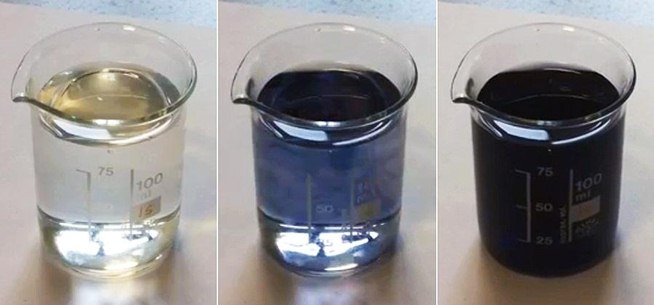
Amazing Mystery Liquid!

Brought to you by Annie


http://science.wonderhowto.com/how-to/classic-chemistry-colorize-colorless-liquids-with-black-magic-aka-iodine-clock-reaction-0139128/